Method statement template
A method statement sets out how a contractor will carry out a piece of construction work safely, step by step, with the people, plant, controls and emergency arrangements for that job. It sits under the construction phase plan and summarises the risk assessment, one row per hazard. A builder writes one for every job, with the site, the client, the team, the sequence of work and the hazards changing each time.
Made by DocuWeave. Use at your own discretion.
What changes each time
22 values. Everything else is your wording, kept exactly.
The job
- Project and site address
- Client
- Contractor
- Document reference and revision
- Start date and duration
- Working hours
- Areas affected and work not covered
CDM 2015
- Client type
- More than one contractor
- Construction phase plan reference
- F10 notification date and reference
People, plant and steps
- People, with contact numbers and cards held
- Plant, equipment and materials, with checks
- Sequence of work
- Hazards and controls
- PPE and when it is worn
- Permits
Working at height and emergencies
- Access equipment
- Weather that stops work at height
- First aid kit, extinguishers and assembly point
- Nearest A&E
- Out-of-hours contact
The rules it usually needs
Written in plain English when the template is set up.
- Once for each item
“One row for each hazard, each person, each item of plant, each step of the work, each item of PPE and each permit.”
The site survey listed five hazards, so the hazards table has five rows, each with its controls and any further action.
- The AI decides from the paperwork
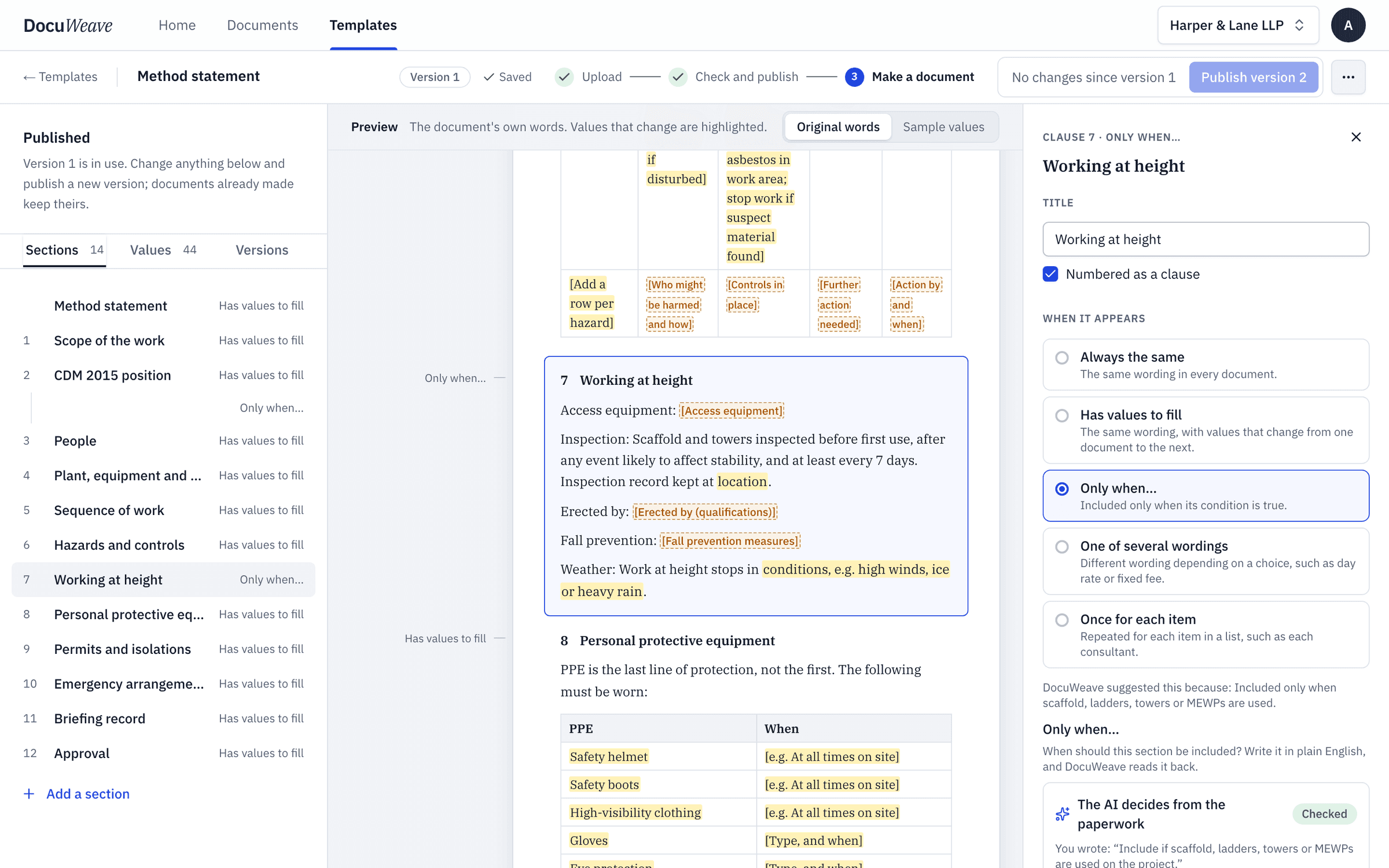
“Include the working at height section only when scaffold, ladders, towers or MEWPs are used.”
The survey and the plant list named a mobile tower and stepladders, so the section was included, with that reason shown.
- The AI decides from the paperwork
“Include the F10 notification line only when the project is notifiable to HSE.”
The survey said the job was not notifiable, so the line was left out.
One worked example, start to finish
The method statement in DocuWeave, from upload to approval.
 1
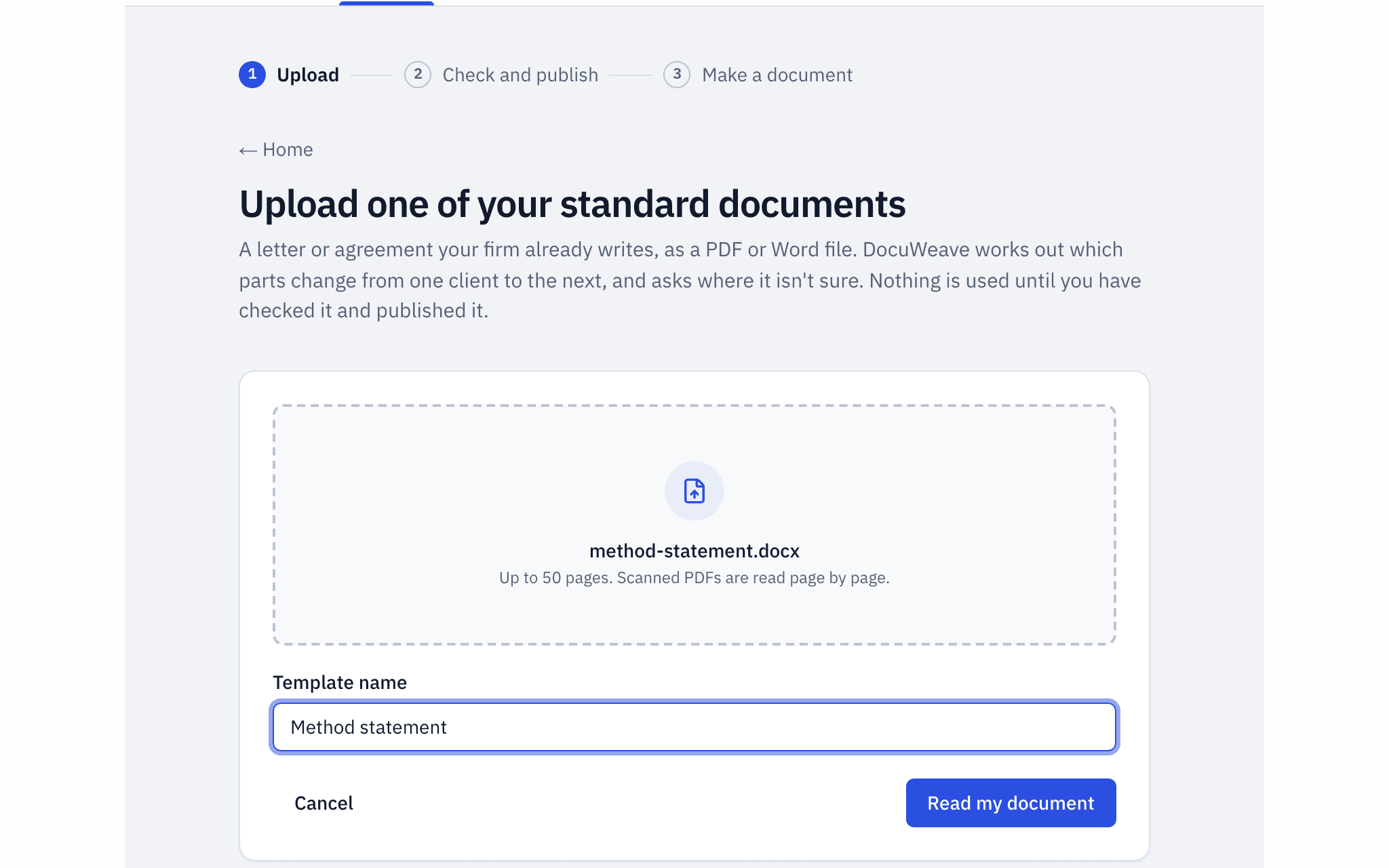
The document uploaded
The method statement, a Word file, uploaded as it is.
- 2
The template it became
It found 14 sections and 43 values, and asked 9 questions before publishing. The working at height section appears only when scaffold, ladders, towers or MEWPs are used.
 3
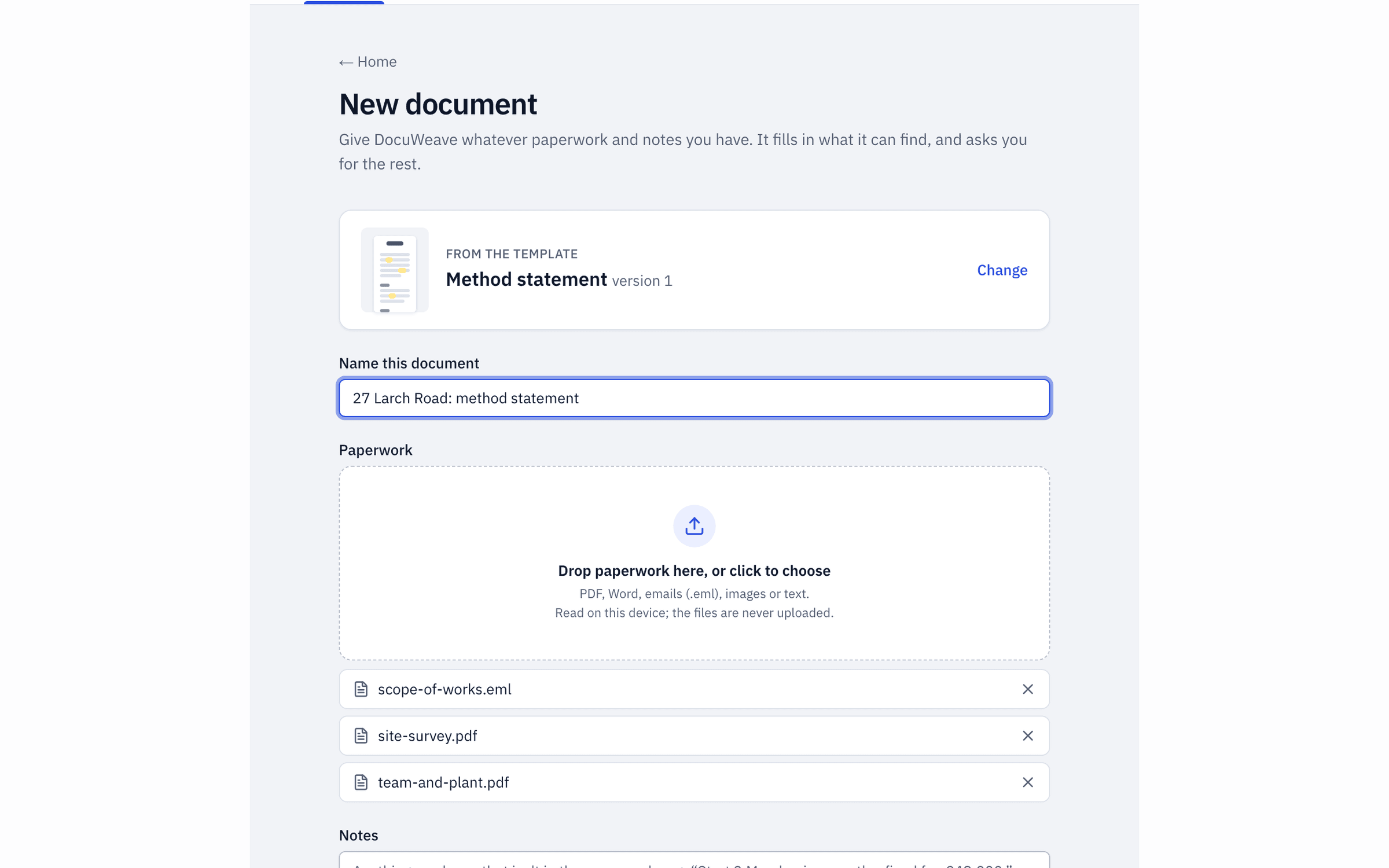
The paperwork dropped in
The client's scope-of-works email, the site survey notes and the team, plant and permits list.
 4
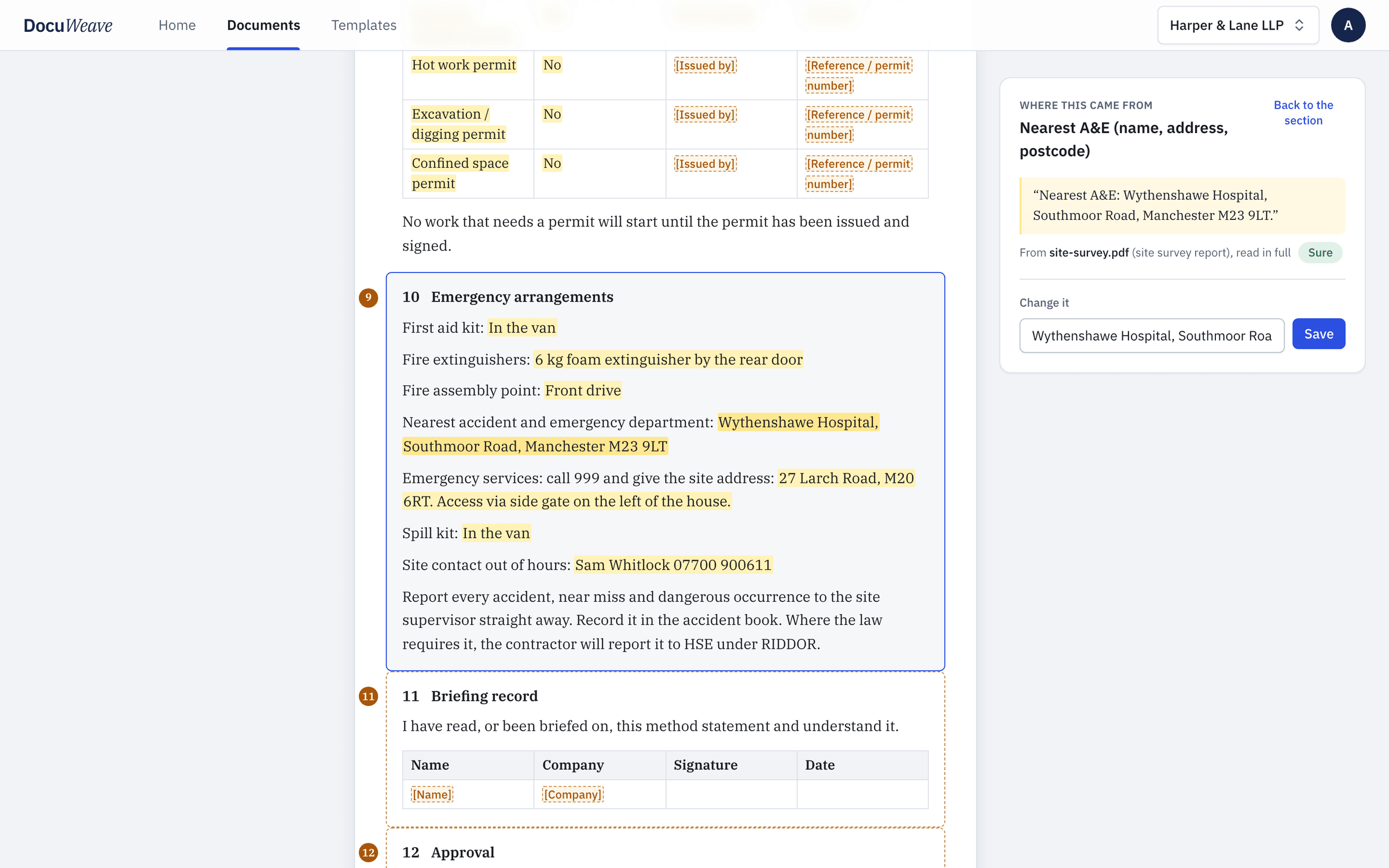
What was found, with sources
37 of 42 values filled from the paperwork, each with the passage it came from.
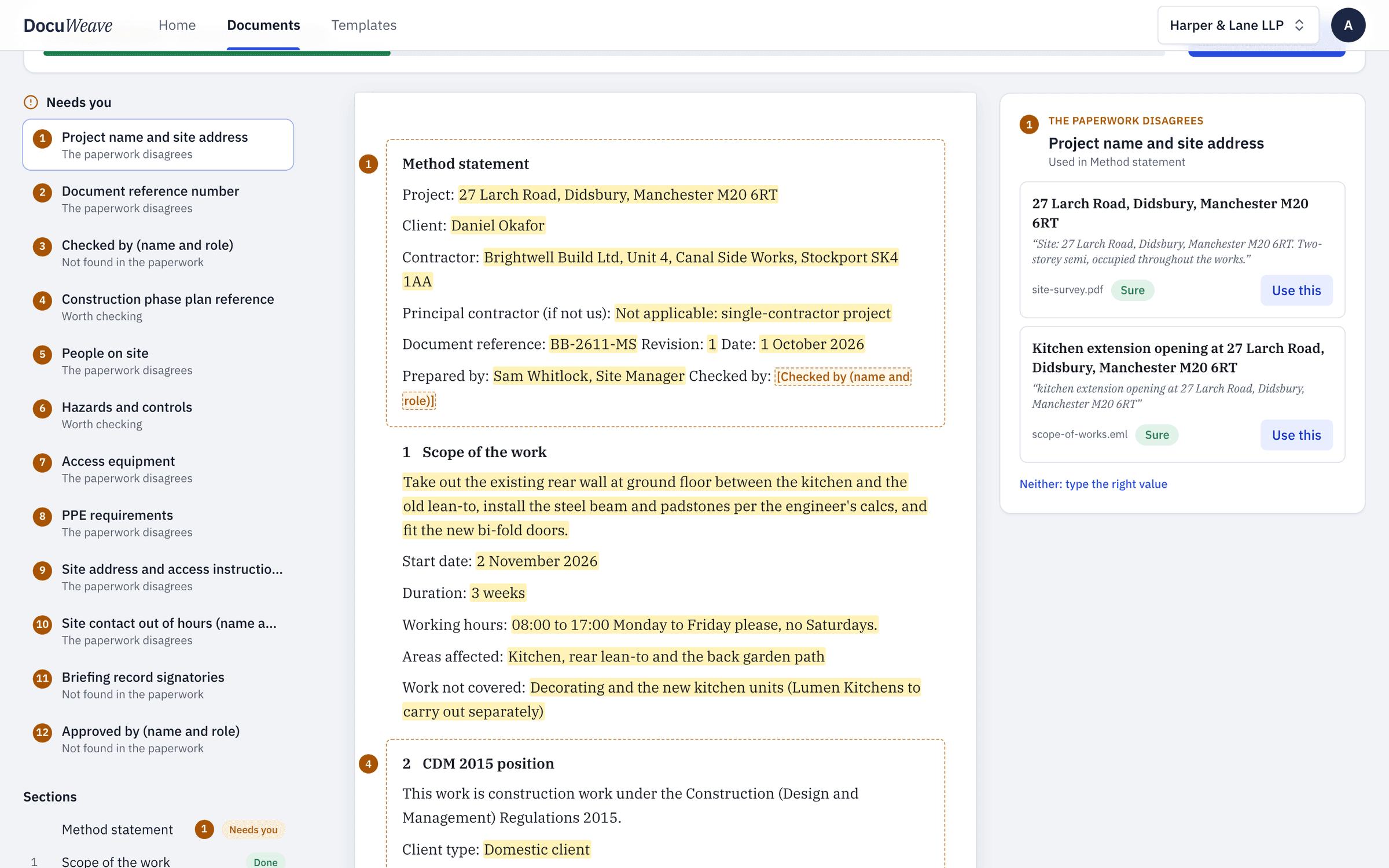 5
What it asked
12 things for a person, starting with the project name, which the email and the survey gave differently.
 6
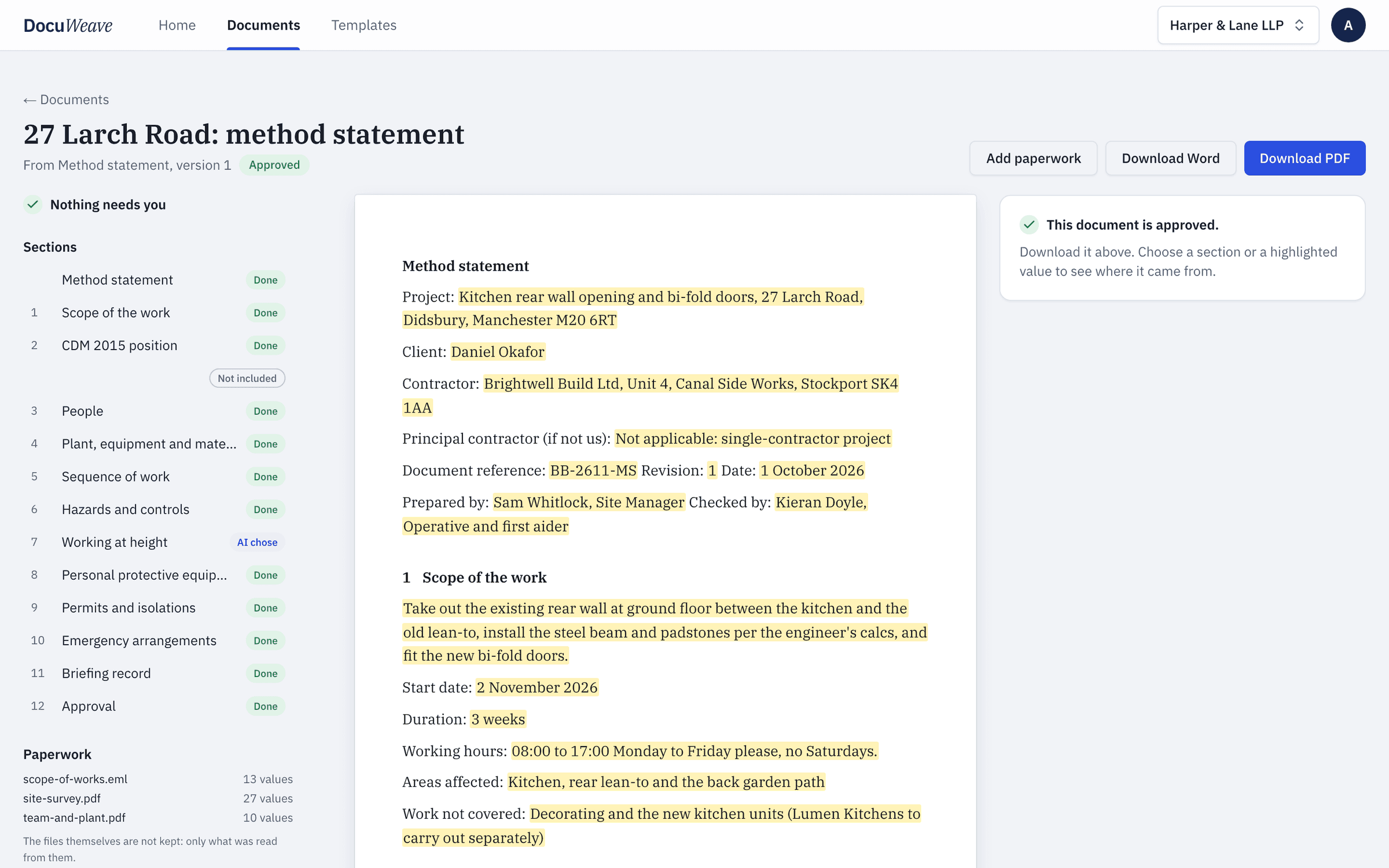
The approved output
Approved, with Word and PDF downloads.
A free method statement to download
- Method statement, filled with fictional details (Word)
- Method statement, filled with fictional details (PDF)
Use it as it is, or upload it to DocuWeave and make it a template.
DocuWeave is not a law firm. A general template for common situations in England and Wales. It is not tailored to you and we do not update it when the law changes, so check it suits your situation before you use it. Terms.
Made by DocuWeave. Use at your own discretion.
Questions people ask
What is the difference between a method statement and a risk assessment?
A risk assessment identifies the hazards and how to control them. A method statement sets out how the work will be done, step by step, using those controls. Together they are often called RAMS.
Is a method statement a legal requirement?
The law requires a suitable risk assessment and, under CDM 2015, a construction phase plan. A method statement is the usual way to show how a particular task will be done safely, and principal contractors and clients often ask for one.
Who writes the method statement?
Usually the contractor doing the work, often the site supervisor or manager, and it is then checked and approved by the principal contractor or the client's representative.
Do domestic jobs fall under CDM 2015?
Yes. On a domestic project the client's duties pass to the contractor if there is only one, to the principal contractor if there is more than one, or to the principal designer if there is a written agreement for them to take them on.
How often should scaffold and towers be inspected?
Before first use, after anything likely to affect their stability, and at least every 7 days where someone could fall 2 metres or more, with a record kept.
Use this template
It opens in DocuWeave as a template you can check, change and publish. Nothing is used until you do.