An agency worker contract sets out the terms on which a recruitment agency, acting as an employment business, finds temporary assignments for a worker.
What changes each time
- Agency's legal name
- Agency's trading name
- Company number
- Registered office address
- Complaints contact
- Worker's full name
- and 21 more
An assignment confirmation is the document a recruitment agency sends a temporary worker with the details of a specific assignment.
What changes each time
- Employment business's full name
- Address, phone and email
- Date
- Booking reference
- Worker's full name
- Worker's address or email
- and 20 more
A capability meeting letter invites an employee to a formal meeting about their performance, after informal attempts to deal with it have not worked.
What changes each time
- Employer's full name
- Employer's address
- Employee's full name
- Employee's address
- Employee's first name
- Date of the informal meeting
- and 13 more
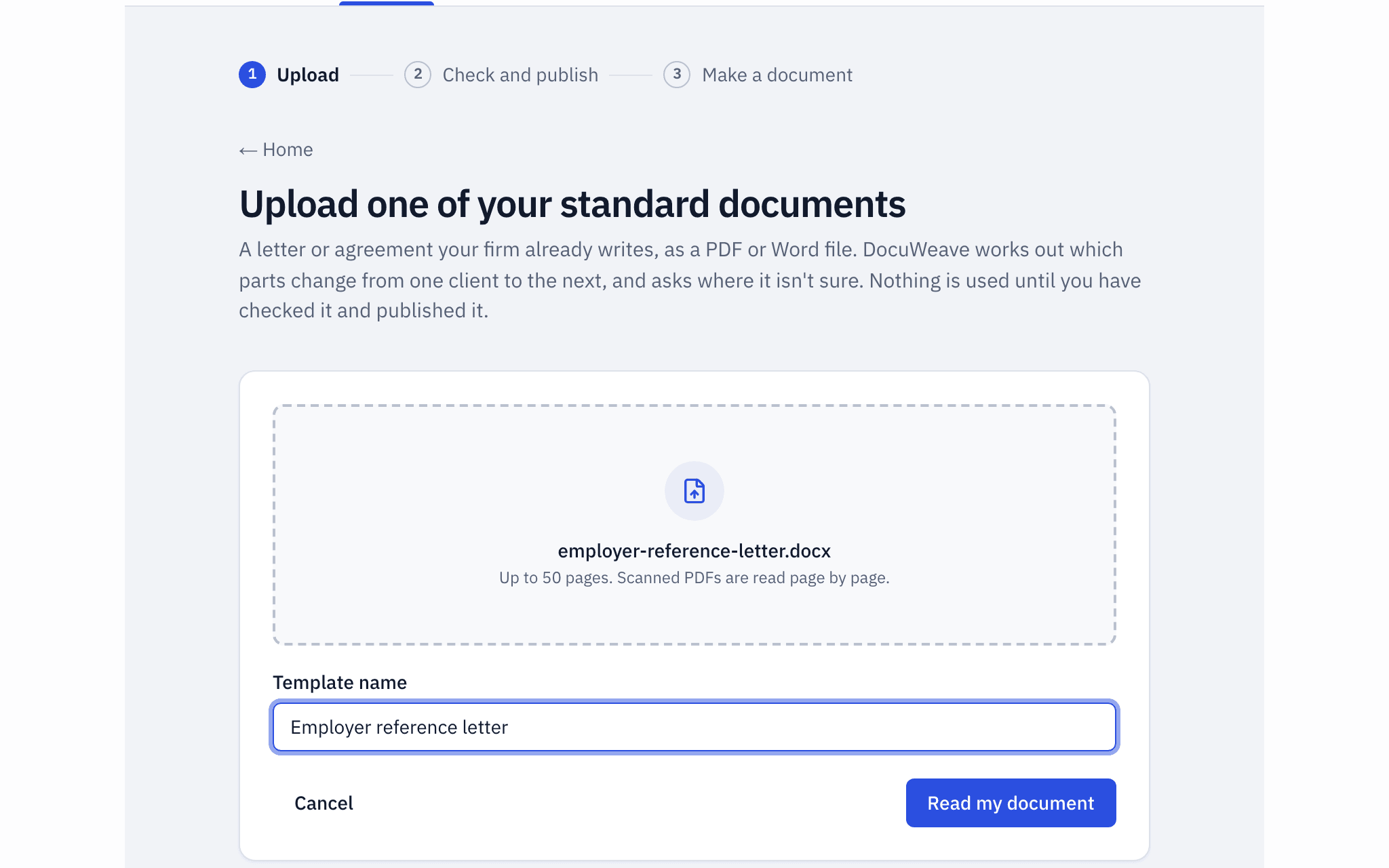
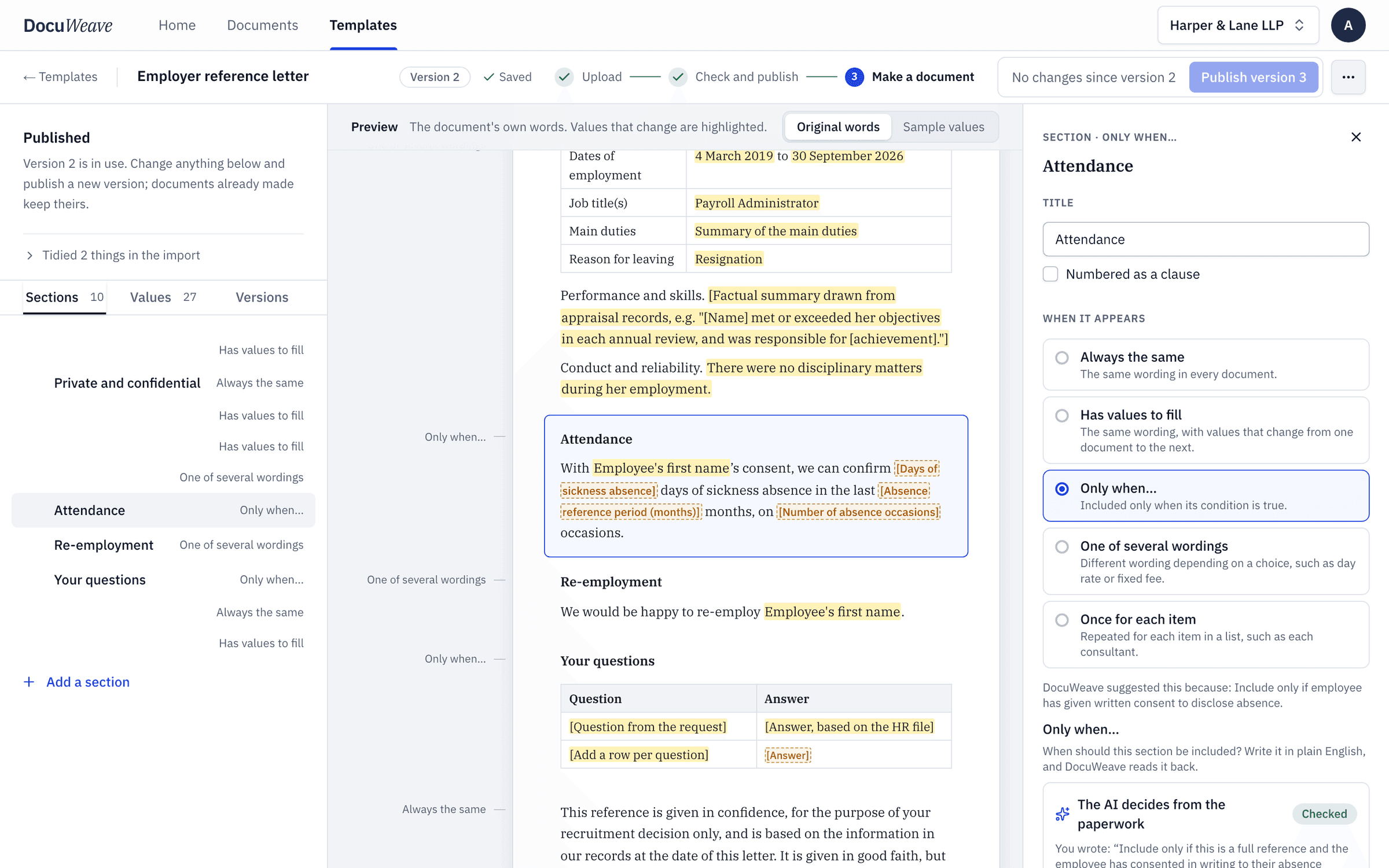
An employer reference letter answers a request for a reference about a current or former employee, either as a factual reference or as a full one.
What changes each time
- Who asked
- Date of the request
- Type of reference
- Full name
- Dates of employment
- Job titles
- and 10 more
A grievance meeting invitation letter invites an employee who has raised a formal grievance to a meeting to discuss it.
What changes each time
- Employer's full name
- Employer's address
- Employee's full name
- Employee's address
- Employee's first name
- Date of the grievance
- and 9 more
A grievance outcome letter tells an employee the decision on their formal grievance, point by point, and explains how to appeal.
What changes each time
- Employer's full name
- Employer's address
- Employee's full name
- Employee's address
- Employee's first name
- Date of the written grievance
- and 13 more
A key information document tells an agency worker, before they start, who is paying them and how, what deductions will be made and what their pay will be.
What changes each time
- Worker's name
- Employment business
- Type of contract
- Employer, if different
- Who pays the worker, if different
- Pay frequency
- and 8 more
A limited company contractor agreement is the contract between a recruitment agency and a contractor's own limited company for an individual to provide services to an agency's client.
What changes each time
- Date of the agreement
- Agency's full legal name
- Agency's company number and registered office
- Contractor company's full legal name
- Contractor company's number and registered office
- Individual's full name
- and 20 more
A pay rise letter tells an employee in writing that their pay is going up, by how much and from when.
What changes each time
- Employer's full name
- Employer's address
- Employee's full name
- Employee's address
- Employee's first name
- Reason for the rise
- and 13 more
A placement confirmation letter tells a client that a candidate has accepted their offer of a permanent job, and confirms the details and the agency's fee under the agreed terms of business.
What changes each time
- Agency's full name
- Agency's address
- Date
- Client contact's name
- Client contact's job title
- Client's full legal name
- and 15 more
A probation extension letter tells a new employee that their probation period will be longer than planned, and sets out what they need to achieve in the extra time.
What changes each time
- Employer's full name
- Employer's address
- Employee's full name
- Employee's address
- Employee's first name
- Name of manager
- and 13 more
A probation review outcome letter tells a new employee the result of their probation review: that they have passed, or that they have not and their employment will end with notice.
What changes each time
- Employer's full name
- Employer's address
- Employee's full name
- Employee's address
- Employee's first name
- Name of manager
- and 16 more
Recruitment terms of business are the agreement between a recruitment agency and a client that sets out how the agency introduces or supplies candidates and what the client pays.
What changes each time
- Agency's legal name
- Agency's trading name
- Agency's company number
- Registered office or business address
- Trade body
- Client's full legal name
- and 21 more
A status determination statement is the document a client gives a contractor, and the agency or company it contracts with, to say whether the engagement falls inside the off-payroll working rules (IR35).
What changes each time
- Client's full legal name
- Client's address
- Issued by, name and job title
- Email address
- Worker's full name
- Intermediary's legal name and number
- and 15 more
A variation of contract letter confirms in writing a change to an employee's terms that the employer and employee have already agreed, such as new hours, a new place of work or a new job title.
What changes each time
- Employer's full name
- Employer's address
- Employee's full name
- Employee's address
- Employee's first name
- Name of the person met
- and 13 more