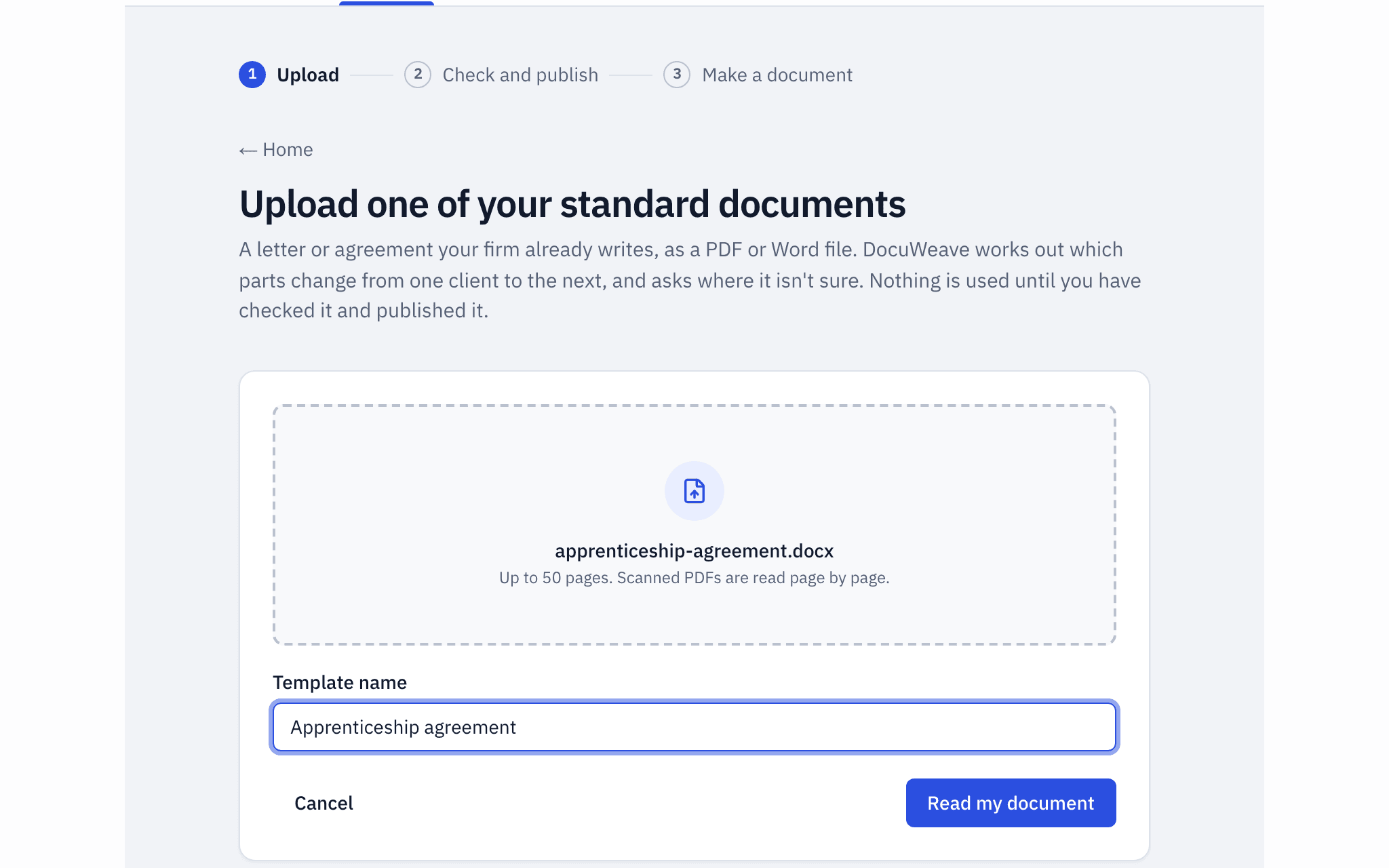
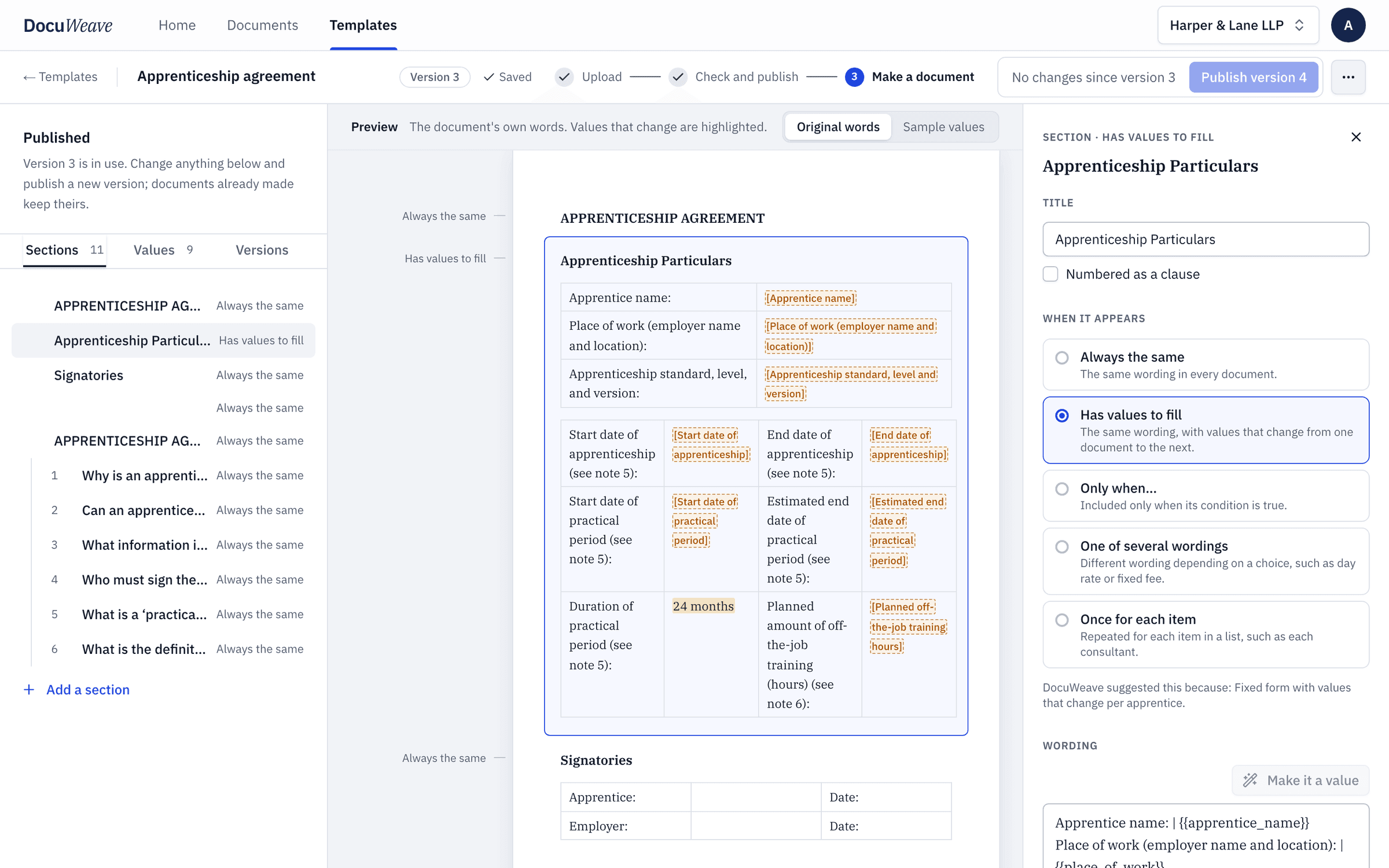
An apprenticeship agreement is the short statutory document an employer and apprentice in England sign at the start of an apprenticeship.
What changes each time
- Apprentice name
- Place of work
- Apprenticeship standard, level and version
- Start date of apprenticeship
- End date of apprenticeship
- Start date of practical period
- and 3 more
A capability meeting letter invites an employee to a formal meeting about their performance, after informal attempts to deal with it have not worked.
What changes each time
- Employer's full name
- Employer's address
- Employee's full name
- Employee's address
- Employee's first name
- Date of the informal meeting
- and 13 more
A disciplinary appeal outcome letter tells an employee the result of their appeal against a dismissal or other serious disciplinary action.
What changes each time
- Employee
- Original outcome
- Appeal meeting date
- Who heard the appeal
- Appeal outcome
- What happens instead
- and 2 more
The letter an employer sends to invite an employee to a formal disciplinary hearing.
What changes each time
- Employee's name
- Hearing date
- Hearing time
- Hearing location
- Manager's name
- What the hearing could lead to
- and 4 more
A disciplinary outcome letter tells an employee in writing that a disciplinary hearing has ended in a written warning or a final written warning.
What changes each time
- Employee name
- Date of the disciplinary hearing
- Type of warning
- How long the warning stays on file
- Conduct or performance
- The unsatisfactory conduct or performance
- and 6 more
A dismissal letter confirms in writing the outcome of a disciplinary hearing, whether that is no action, a disciplinary sanction or dismissal.
What changes each time
- Employee's name
- Disciplinary hearing date
- Outcome
- Last day of service
- Reasons for dismissal
- Notice on dismissal
- and 5 more
An employer reference letter answers a request for a reference about a current or former employee, either as a factual reference or as a full one.
What changes each time
- Who asked
- Date of the request
- Type of reference
- Full name
- Dates of employment
- Job titles
- and 10 more
An employment contract sets out the main terms of a job in writing, and UK employers must give every employee a written statement of these particulars by their first day.
What changes each time
- Employee name
- Employer name
- Job title
- Employment start date
- Appointment type
- Pay
- and 13 more
A fixed-term employment contract is the written statement of particulars for someone employed for a set period, such as maternity cover or a seasonal role.
What changes each time
- Employee name
- Employer name
- Job title
- Employment start date
- How the fixed term ends
- Why the post is fixed term
- and 10 more
A flexible working decision letter tells an employee the outcome of their statutory flexible working request.
What changes each time
- Employee name
- Date of the request
- Decision
- Date of the consultation meeting
- Agreed working arrangement
- Contact details for next steps
- and 5 more
A flexible working request acknowledgement letter confirms that an employer has received an employee's statutory flexible working request.
What changes each time
- Employee
- Date of the request
- Decision by
- Meeting within
- Signed by
- Job title
- and 1 more
A grievance meeting invitation letter invites an employee who has raised a formal grievance to a meeting to discuss it.
What changes each time
- Employer's full name
- Employer's address
- Employee's full name
- Employee's address
- Employee's first name
- Date of the grievance
- and 9 more
A grievance outcome letter tells an employee the decision on their formal grievance, point by point, and explains how to appeal.
What changes each time
- Employer's full name
- Employer's address
- Employee's full name
- Employee's address
- Employee's first name
- Date of the written grievance
- and 13 more
An investigation meeting invitation letter asks an employee to attend a meeting as part of a workplace investigation.
What changes each time
- Employee
- Investigator
- What it is looking into
- Date
- Time
- Place
- and 2 more
A job offer letter tells the successful candidate they have the job, with the salary, start date and type of post.
What changes each time
- Candidate's full name
- Candidate's first name
- Candidate's address
- Job title
- Annual salary
- Start date
- and 8 more
A key information document tells an agency worker, before they start, who is paying them and how, what deductions will be made and what their pay will be.
What changes each time
- Worker's name
- Employment business
- Type of contract
- Employer, if different
- Who pays the worker, if different
- Pay frequency
- and 8 more
A maternity leave confirmation letter confirms in writing an employee's maternity leave dates and what the employee needs to know about it.
What changes each time
- Employee's name
- How the employee gave notice
- Date of notification
- Maternity leave start date
- Return-to-work date
- Weeks of enhanced maternity leave
- and 4 more
A pay rise letter tells an employee in writing that their pay is going up, by how much and from when.
What changes each time
- Employer's full name
- Employer's address
- Employee's full name
- Employee's address
- Employee's first name
- Reason for the rise
- and 13 more
A probation extension letter tells a new employee that their probation period will be longer than planned, and sets out what they need to achieve in the extra time.
What changes each time
- Employer's full name
- Employer's address
- Employee's full name
- Employee's address
- Employee's first name
- Name of manager
- and 13 more
A probation review outcome letter tells a new employee the result of their probation review: that they have passed, or that they have not and their employment will end with notice.
What changes each time
- Employer's full name
- Employer's address
- Employee's full name
- Employee's address
- Employee's first name
- Name of manager
- and 16 more
A redundancy consultation letter, also called an at-risk letter, tells an employee in writing that their job may be made redundant and that consultation is starting.
What changes each time
- Letter date
- Employee name
- When the at-risk meeting was held
- Estimated number of redundancies
- Affected team
- Reason for the potential redundancies
- and 7 more
A redundancy letter confirms in writing that an employee has been selected for redundancy.
What changes each time
- Employee name
- Organisation name
- Letter date
- Letter sent by
- Notice period (weeks)
- What the notice is based on
- and 9 more
A reference request letter asks a referee to confirm what an applicant has said about their work history or character.
What changes each time
- Sender's name
- Employer name and address
- Date of letter
- Applicant's name
- Job title
- Referee's name
- and 2 more
A resignation acceptance letter confirms in writing that an employer has received an employee's resignation and what happens next.
What changes each time
- Business name
- Business address
- Date of letter
- Employee name
- Date of the resignation
- Final day of work
- and 7 more
A secondment agreement sets out the terms on which an employee is lent by their employer to work for another organisation for a fixed time or project.
What changes each time
- Date of the agreement
- Employer's full legal name
- Host organisation's full legal name
- Employee's full name
- Employee's home address
- Role at the host
- and 15 more
A settlement agreement is the legally binding agreement an employer and employee sign when they agree the terms of an exit: the leaving date, any payment in lieu of notice, a settlement payment, and the claims the employee agrees not to bring.
What changes each time
- Employer name
- Employee name
- Job title
- Employment start date
- Termination date
- Weeks of pay in lieu of notice
- and 13 more
A settlement offer letter opens settlement discussions with an employee, proposing that their employment ends on agreed terms.
What changes each time
- Employee name
- Type of concern
- Concerns and action taken so far
- Procedure that would come next
- Where the procedure can be read
- Proposed employment end date
- and 8 more
A status determination statement is the document a client gives a contractor, and the agency or company it contracts with, to say whether the engagement falls inside the off-payroll working rules (IR35).
What changes each time
- Client's full legal name
- Client's address
- Issued by, name and job title
- Email address
- Worker's full name
- Intermediary's legal name and number
- and 15 more
A suspension letter confirms in writing that an employee has been suspended on their usual pay while an allegation against them is investigated.
What changes each time
- Employee
- Home address
- Post and department
- Allegations, one bullet each
- Changes considered first, one bullet each
- Why they were not enough
- and 8 more
A training repayment agreement records that an employer will pay for an employee's course and that the employee will repay some or all of the cost if they leave within a set time.
What changes each time
- Date
- Employer's company name
- Employer's address
- Employee's full name
- Employee's job title
- Course or qualification
- and 13 more
A variation of contract letter confirms in writing a change to an employee's terms that the employer and employee have already agreed, such as new hours, a new place of work or a new job title.
What changes each time
- Employer's full name
- Employer's address
- Employee's full name
- Employee's address
- Employee's first name
- Name of the person met
- and 13 more
A work experience agreement sets out what a student, their education provider and the host employer expect from a placement.
What changes each time
- Education provider's name
- Employer's name
- Student's name
- Parent or carer's name
- Placement start date
- Placement end date
- and 14 more
A zero hours contract is the written statement of terms for a worker who has no guaranteed hours: the employer is not obliged to offer work, and the worker is not obliged to accept it.
What changes each time
- Worker's name
- Employer
- Start date
- Job title
- Places of work and hourly rates
- Normal place of work
- and 6 more