A building contract is the written agreement between a client and a builder for building work, setting out the work, the price, the dates, how and when the builder is paid and what happens if something goes wrong.
What changes each time
- Contract date
- Client's name and address
- Contractor's name or company and address
- Site address
- Short description of the works
- Documents forming part of the contract
- and 27 more
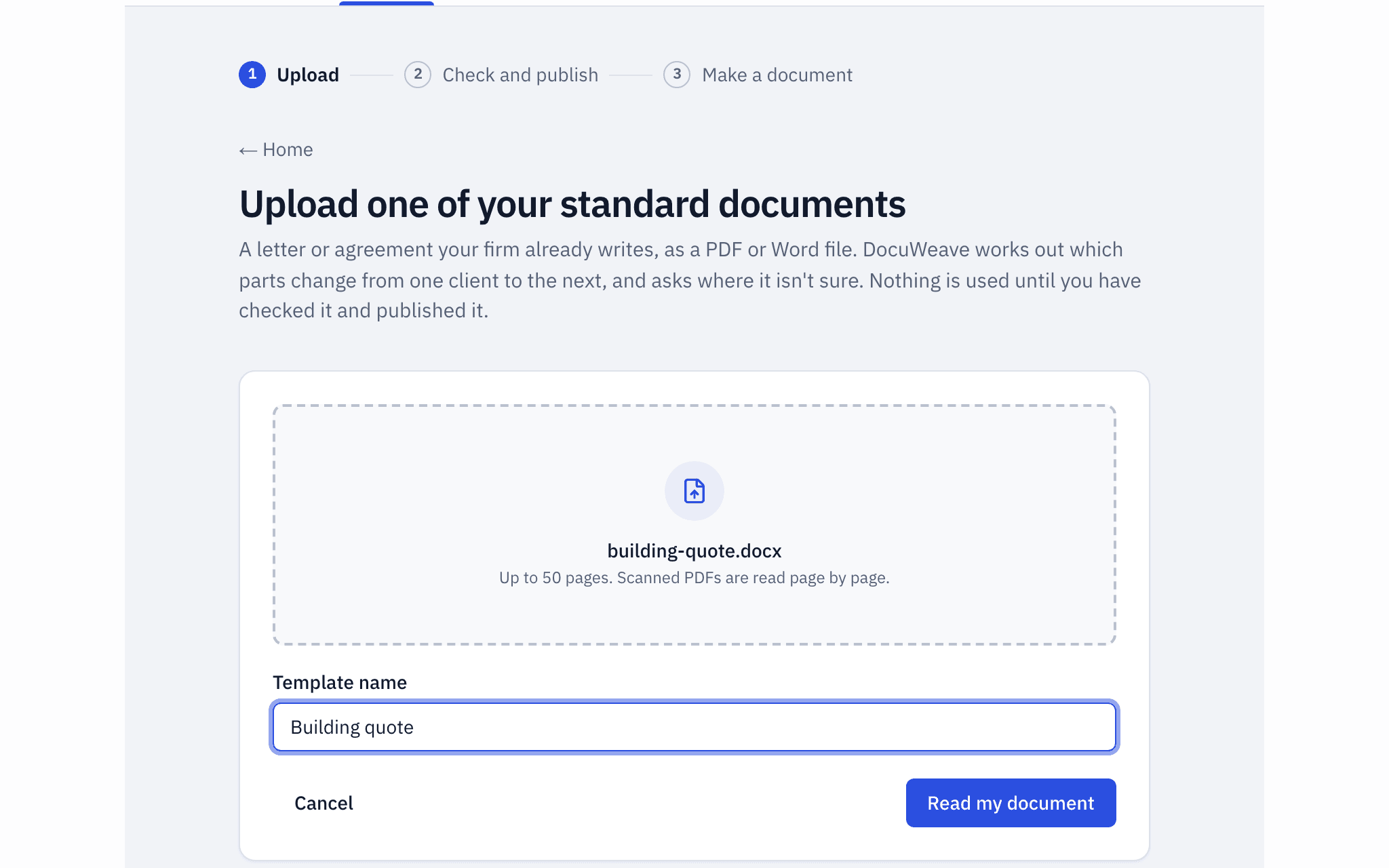
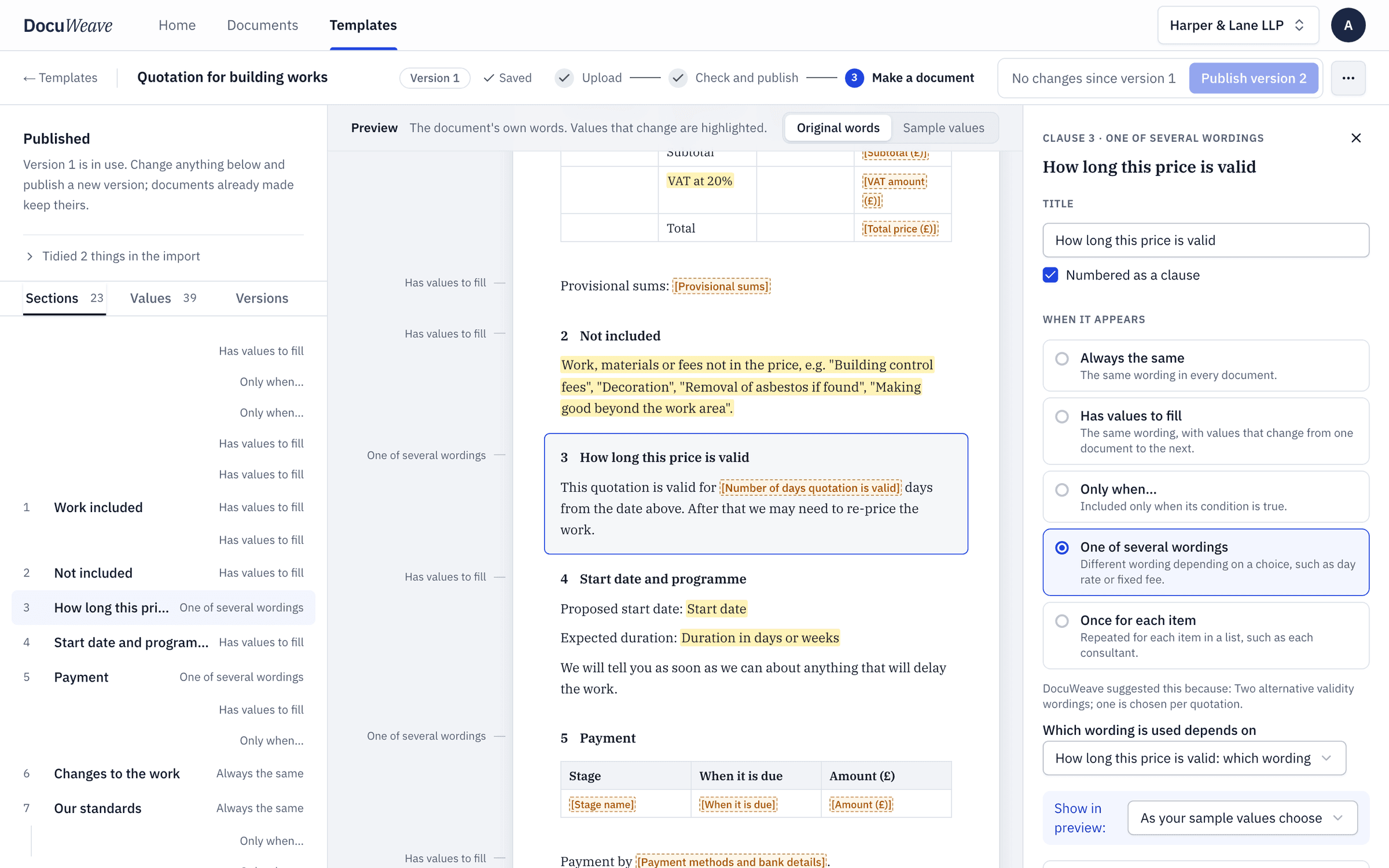
A building quotation sets out the price for a piece of building work, item by item, with what is not included, how long the price stands, when the work starts and how it is paid for.
What changes each time
- Contractor, address and contact details
- Company and VAT numbers
- Client and address
- Site address
- Quotation number
- Items of work, quantities and prices
- and 10 more
A cleaning services contract is the agreement between a business and a cleaning contractor for regular cleaning of commercial premises, covering what is cleaned and how often, the charge, the staff, the equipment and how either side can end it.
What changes each time
- Date of the contract
- Client's company name, number and registered office
- Contractor's company name, number and registered office
- Address of the premises
- Start date
- Initial period, if any
- and 23 more
A construction phase plan is the simple written plan that the Construction (Design and Management) Regulations 2015 require before building work starts.
What changes each time
- Contractor
- Client and address
- Principal designer
- What the job is
- Start and finish dates
- Welfare facilities
- and 3 more
A construction subcontract is the agreement between a main contractor and a subcontractor who carries out part of the work on a project, covering the scope, the price, the programme, payment, retention and how disputes are settled.
What changes each time
- Date of the subcontract
- Main contractor's name, number and registered office
- Subcontractor's name or company and address
- Project name and site address
- Main contract form, date and employer
- Main contract extracts attached
- and 29 more
A variation agreement records an agreed change to an existing contract, signed by every party, so the contract and the change can be read together.
What changes each time
- Each party's full legal name
- Company or individual
- Registered office or address
- Short name
- Third party joining
- Original contract
- and 9 more
A late payment letter chases a business customer for an overdue invoice and sets out what the law allows you to claim: statutory interest, fixed compensation and reasonable recovery costs.
What changes each time
- Your business name
- Customer's business name
- Customer contact's name
- Letter date
- Invoice number
- Invoice date
- and 13 more
A method statement sets out how a contractor will carry out a piece of construction work safely, step by step, with the people, plant, controls and emergency arrangements for that job.
What changes each time
- Project and site address
- Client
- Contractor
- Document reference and revision
- Start date and duration
- Working hours
- and 16 more
A pay less notice tells the payee under a construction contract that the payer intends to pay less than the sum in a payment notice or application, under section 111 of the Housing Grants, Construction and Regeneration Act 1996.
What changes each time
- Payee
- Payer
- Contract and project
- Application or payment notice it relates to
- Notified sum
- Sum considered due
- and 5 more
A payment application is a contractor's or subcontractor's request for an interim payment for construction work done up to a valuation date, showing how the sum is calculated from the work, variations and materials, less retention and earlier payments.
What changes each time
- Payer's company name and address
- Payee's company name and address
- Contract or subcontract reference and date
- Project name and site address
- Application number
- Valuation date
- and 17 more
A personal guarantee is a written promise by an individual, often a company director, to pay a business's debts to a creditor if the business does not.
What changes each time
- Date of the guarantee
- Guarantor's full name and home address
- Creditor's full legal name, company number and address
- Customer's full legal name, company number or address
- Guarantor's relationship to the customer
- Credit being given
- and 12 more
A practical completion certificate confirms that building work has been finished apart from minor items, and starts the defects period.
What changes each time
- Contract name or reference, and date
- Client (employer)
- Contractor
- Site address
- Short description of the works
- Contract administrator's name, firm and position
- and 11 more
A risk assessment records the hazards at a workplace or on a job, who could be harmed and how, what is already being done and what more is needed.
What changes each time
- Company name
- Carried out by
- Date carried out
- Date of next review
- Hazard
- Who might be harmed and how
- and 4 more
A snagging list records the defects and unfinished items found when a client and contractor walk round building work near completion, with who will put each one right and by when.
What changes each time
- Project and site address
- Contract reference
- Client and contractor
- Inspection date
- Who was present
- Location
- and 9 more
A variation order is a written record of a change to building work already agreed: what is being added, omitted or changed, what it does to the price and whether the completion date moves.
What changes each time
- Variation order number
- Date
- Contract reference and date
- Project name and site address
- Client
- Contractor
- and 14 more
A without prejudice offer letter makes an offer to settle a dispute that cannot be shown to the court as an admission.
What changes each time
- Sender and recipient
- Heading
- What the dispute is about
- Correspondence it refers to
- Your position, in a sentence or two
- Who pays and how much
- and 3 more
A workmanship guarantee is a builder's or tradesperson's written promise to put right defects in a finished job for a stated period.
What changes each time
- Guarantee number
- Guarantor's name or company name, company number and address
- Customer's full name
- Property address
- Description of the work
- Completion date
- and 12 more