A deposit deductions letter is what a landlord or letting agent sends a tenant at the end of a tenancy in England to propose deductions from the deposit and return the balance.
What changes each time
- Landlord's or agent's name, address, email and phone
- Date of the letter
- Tenant's name or all joint tenants' names
- Forwarding address or email
- Property address
- Tenancy end date
- and 16 more
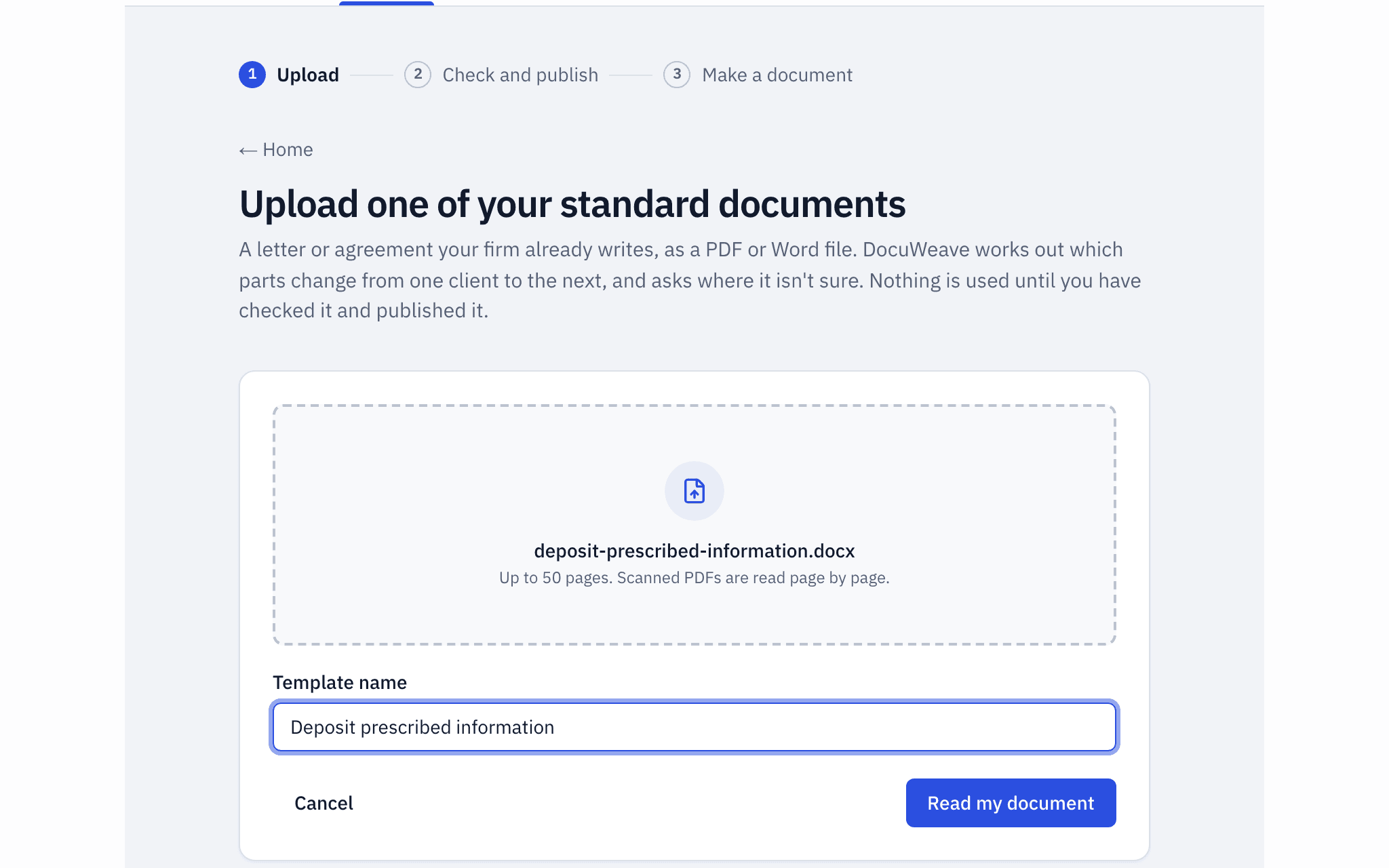
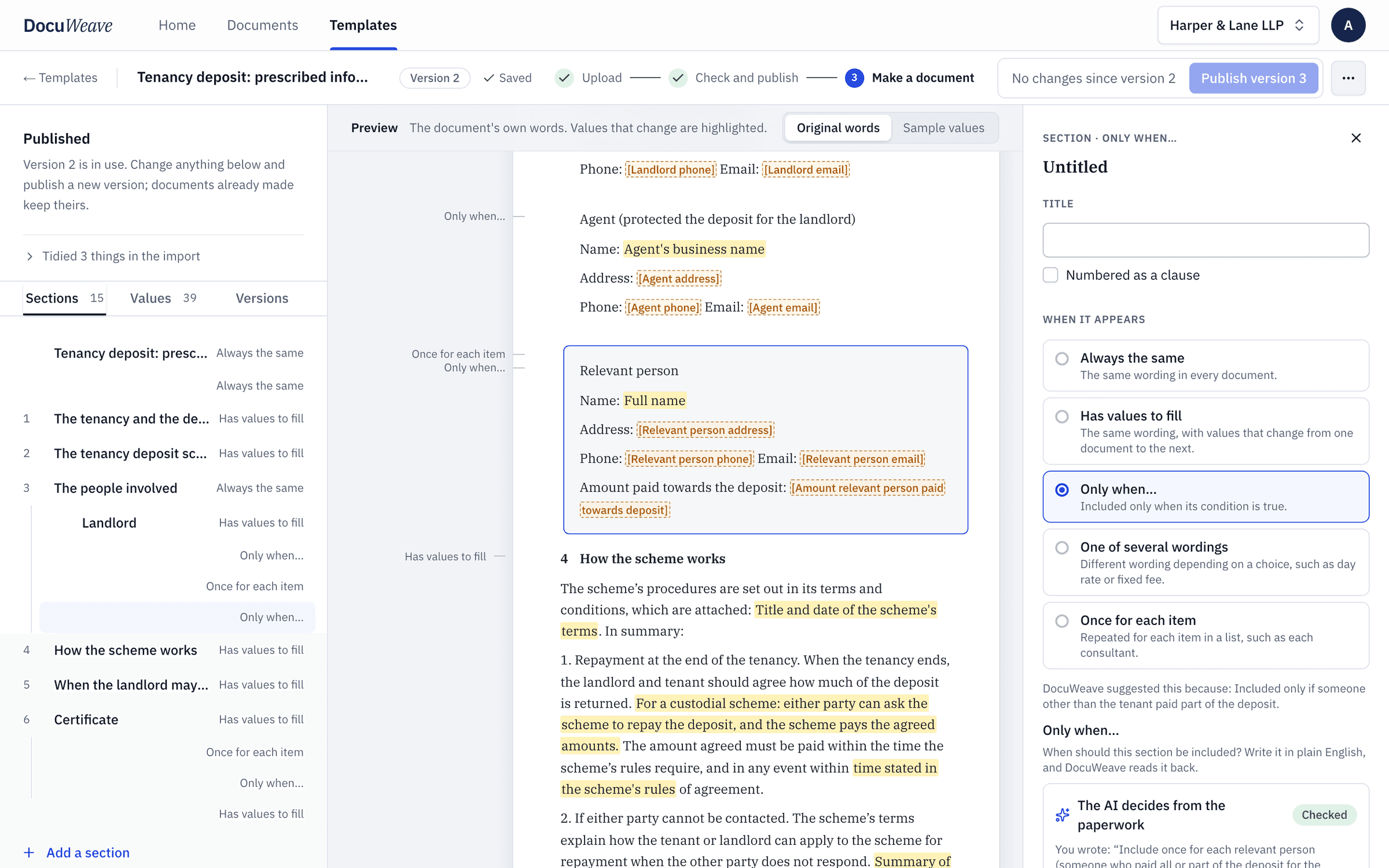
Deposit prescribed information is the information a landlord must give a tenant, and anyone who paid towards the deposit, within 30 days of taking a deposit in England.
What changes each time
- Property and tenancy start date
- Deposit amount
- Dates received and protected
- Protection reference
- Scheme and type
- Administrator and contact details
- and 9 more
Estate agency terms of business are the terms an estate agent gives a seller before being instructed to sell a property in England and Wales, setting out the type of agency, the fee, the services and how the seller can cancel.
What changes each time
- Agency's trading name and legal name
- Company number and address
- Redress scheme name and membership number
- HMRC anti-money laundering registration number
- Professional body and membership number
- Seller's name or all sellers' names
- and 19 more
A guarantor agreement is a document in which a guarantor promises a landlord that a tenant's rent and other obligations under a tenancy will be met.
What changes each time
- Date of the agreement
- Guarantor's full name and home address
- Landlord's name or all joint landlords' names, and address for notices
- Tenant's full name or each tenant's name
- Notice emails for guarantor and landlord
- Property address
- and 14 more
Heads of terms set out the main terms a landlord and tenant have agreed in principle for a new commercial lease, before the solicitors draft it.
What changes each time
- Landlord, tenant and guarantor
- Solicitors and agents
- Property address
- Description and rights
- Term
- Security of tenure
- and 11 more
An HMO room tenancy agreement lets one room in a shared house to one tenant on an assured periodic tenancy in England, with the use of the shared kitchen, bathrooms and living areas.
What changes each time
- Landlord and address for notices
- Manager of the house and agent
- Tenant
- House and room
- Shared facilities
- HMO licence
- and 12 more
A holding deposit receipt and terms records a payment made to reserve a rented property in England while the applicant's references and checks are completed.
What changes each time
- Landlord's full name
- Letting agent's business name, address, phone and email
- Applicants' full names
- Property address
- Rent
- Proposed start date
- and 11 more
A holiday let booking agreement sets out the terms on which a guest books a holiday property in England or Wales for set dates: the price, what is paid and when, the house rules, and what happens if either side cancels.
What changes each time
- Owner's name or business name, address, phone and email
- Agency's name, address, phone and email
- Lead guest's name
- Lead guest's home address, phone and email
- Property name and address
- Arrival date and time
- and 24 more
An inventory and check-in report records the contents of a rented property and the condition of every room and item on the day a tenancy starts.
What changes each time
- Property address
- Landlord's name
- Tenant's name or each tenant's name
- Tenancy start date
- Date and time of check-in
- Report prepared by
- and 21 more
A landlord reference letter tells a new landlord or a referencing company how a tenant has paid the rent and looked after the property.
What changes each time
- Landlord or agent sending it
- Recipient and organisation
- Signed by and role
- Tenant
- Property
- Landlord and managing agent
- and 9 more
Lettings agency terms of business are the terms a letting agent gives a landlord in England before being instructed: the services, the fees, how money is handled and how either side can end the arrangement.
What changes each time
- Agency's trading name and legal name
- Company number and address
- Redress scheme and membership number
- Client money protection scheme and membership number
- Professional body and membership number
- Bank holding client money
- and 27 more
A memorandum of sale is the estate agent's record of a property sale agreed subject to contract, sent to the seller, the buyer and both conveyancers.
What changes each time
- Address
- Tenure
- Agreed price
- Included in the price
- Items sold separately
- Names, addresses and contact details
- and 8 more
Mortgage broker terms of business set out the terms on which a mortgage adviser gives a client advice and arranges a mortgage: which lenders they use, how they are paid, and how to complain.
What changes each time
- Firm name, address and contact
- Company number
- FCA reference number
- Principal firm's name and reference number, if an appointed representative
- Client full name(s) and address
- Adviser name
- and 15 more
An occupation contract is the written statement a landlord in Wales must give a contract-holder, setting out the terms of the let.
What changes each time
- Landlord
- Contract-holders
- Landlord's contact details
- Dwelling address
- Initial rent
- First payment date
- and 6 more
A property management agreement appoints an agent to manage a landlord's rented homes in England: finding tenants, collecting rent, protecting deposits, keeping the legal checks up to date and arranging repairs.
What changes each time
- Date of the agreement
- Owner's full name or company name and number, and address
- Agent's legal name, trading name, company number and address
- Start date
- Redress scheme and membership number
- Client money protection scheme and membership number
- and 29 more
A rent arrears letter is what a landlord or letting agent in England sends a tenant who has fallen behind with rent, setting out the account and asking for payment or a repayment plan.
What changes each time
- Landlord's or agent's name, address, email and phone
- Date of the letter
- Tenant's name or all joint tenants' names
- Property address
- Stage of the letter
- Date of the earlier letter
- and 11 more
A section 20 notice of intention is the first formal step in consulting leaseholders before major works paid for through the service charge.
What changes each time
- Addressed to
- Recognised tenants' association
- Landlord
- Managing agent
- Building and date of the notice
- Description, or where to inspect one
- and 6 more
A section 20 notice of reasons is the notice a landlord in England gives leaseholders, within 21 days of signing the contract, to explain why the work was awarded to a contractor other than the one with the lowest estimate or one nominated by a leaseholder or association.
What changes each time
- Leaseholders: each of the building or a named leaseholder
- Recognised tenants' association and secretary's address
- Landlord's name or company name
- Managing agent's name, address, phone and email
- Building or estate name and address
- Date of the notice
- and 14 more
A section 20 statement of estimates is the second stage of consultation on major works to a leasehold building in England.
What changes each time
- Leaseholders: each of the building or a named leaseholder
- Recognised tenants' association and secretary's address
- Landlord's name or company name
- Managing agent's name, address, phone and email
- Building or estate name and address
- Date of the notice
- and 18 more
A snagging list records the defects and unfinished items found when a client and contractor walk round building work near completion, with who will put each one right and by when.
What changes each time
- Project and site address
- Contract reference
- Client and contractor
- Inspection date
- Who was present
- Location
- and 9 more
A tenancy agreement sets out the terms on which a landlord lets a home to a tenant, and in England it now has to include the written information the law requires before an assured periodic tenancy is agreed.
What changes each time
- Landlord
- Landlord's address for notices
- Agent and its role
- Tenants
- Property
- Furnished
- and 20 more
A venue hire agreement is a licence for a hirer to use a room or hall for a stated purpose, on stated dates and hours, without taking over the space.
What changes each time
- Date
- Venue owner name or organisation, address and contact
- Charity number, if a charity
- Hirer name or organisation, address and contact
- Person responsible on the day and mobile
- Venue name and address
- and 21 more